Paint by numbers should be relaxing. You open the kit, find your paints, pick up a brush and gradually watch a picture appear in front of you. At its best, it is one of those hobbies that lets you switch off from everything else for a while.
Unfortunately, not every paint by numbers kit delivers that experience.
Anyone who has spent time reading customer reviews of paint by numbers kits will recognise the same frustrations appearing again and again. Creased canvases, paints that do not cover the numbers, brushes that quickly lose their shape, confusing sections and dried-out paint can turn what should be an enjoyable hobby into an unnecessarily frustrating one.
The good news is that most of these problems can either be prevented by choosing a better-quality kit or solved with a few simple techniques.
Here are ten of the most common paint by numbers complaints, why they happen, and what you can do about them.
1. “My canvas arrived badly creased”
This is probably one of the most frustrating ways to begin a paint by numbers project.
You open the package expecting to start painting, only to discover that the canvas has been folded several times. Deep creases run directly through areas you are supposed to paint.
Cheap kits are often packaged this way simply to reduce the size of the parcel. Unfortunately, folding a painting canvas tightly can leave creases that are difficult to remove completely.
The solution
The best solution is prevention.
Look for paint by numbers kits supplied with the canvas rolled, carefully packaged or already mounted on a frame. Better packaging costs more to produce and ship, but it can make a considerable difference to the painting experience.
If you already have a folded canvas, place it face down on a clean towel and carefully iron the reverse using a low temperature. Never place a hot iron directly onto the printed side.
Another option is to stretch the canvas before painting it.
With Hobby Paint Studio kits, particular attention is given to the presentation and protection of the canvas because the condition of the canvas when you begin affects the entire project.
A premium painting experience really should begin before the first pot of paint is opened.
2. “The numbers and lines keep showing through the paint”
You finish a section, wait for it to dry and then notice something irritating.
The number is still visible.
This happens most frequently with pale colours such as white, cream, yellow and light blue. Acrylic paints naturally vary in opacity, and some pigments provide much better coverage than others.
A heavily printed number beneath a light colour may therefore remain visible after the first coat.
The solution
Do not compensate by applying one extremely thick coat.
Instead, apply two or three thin coats, allowing each layer to dry before adding another.
For particularly light colours, another useful technique is to cover the printed number with a very thin layer of white acrylic paint first. Once dry, paint the correct colour over it.
The quality and preparation of the canvas can also affect coverage. A properly prepared surface allows the paint to sit more evenly rather than disappearing into the canvas fibres.
Hobby Paint Studio kits use a pre-treated linen canvas designed to provide a smoother painting surface and better paint adhesion without the painter having to apply gesso before starting.
The objective is simple: more of the paint remains where you actually want it.
3. “The paint has dried out”
Opening a tiny paint pot and discovering a solid lump instead of usable acrylic paint is particularly disappointing.
Acrylic paint is water based. Once exposed to air, moisture begins evaporating and the paint gradually thickens.
Poorly sealed pots can therefore dry during storage. The problem can also occur while you are working if several pots are left open.
The solution
First, always close each paint pot properly after use.
It is tempting to leave several colours open while working, but acrylic paint can begin developing a skin surprisingly quickly.
If a paint has only become slightly thick, adding one or two drops of clean water and stirring thoroughly will often restore it.
Do not pour large quantities of water into the pot. Too much will weaken the paint and reduce its covering power.
Acrylic flow improver can also help with thicker paint, particularly for experienced painters.
If the paint has completely hardened, however, it will normally need replacing.
One useful habit is to work with just one or two colours at a time and close every pot immediately after loading your brush.
Simple.
Effective.
4. “The brushes are terrible”
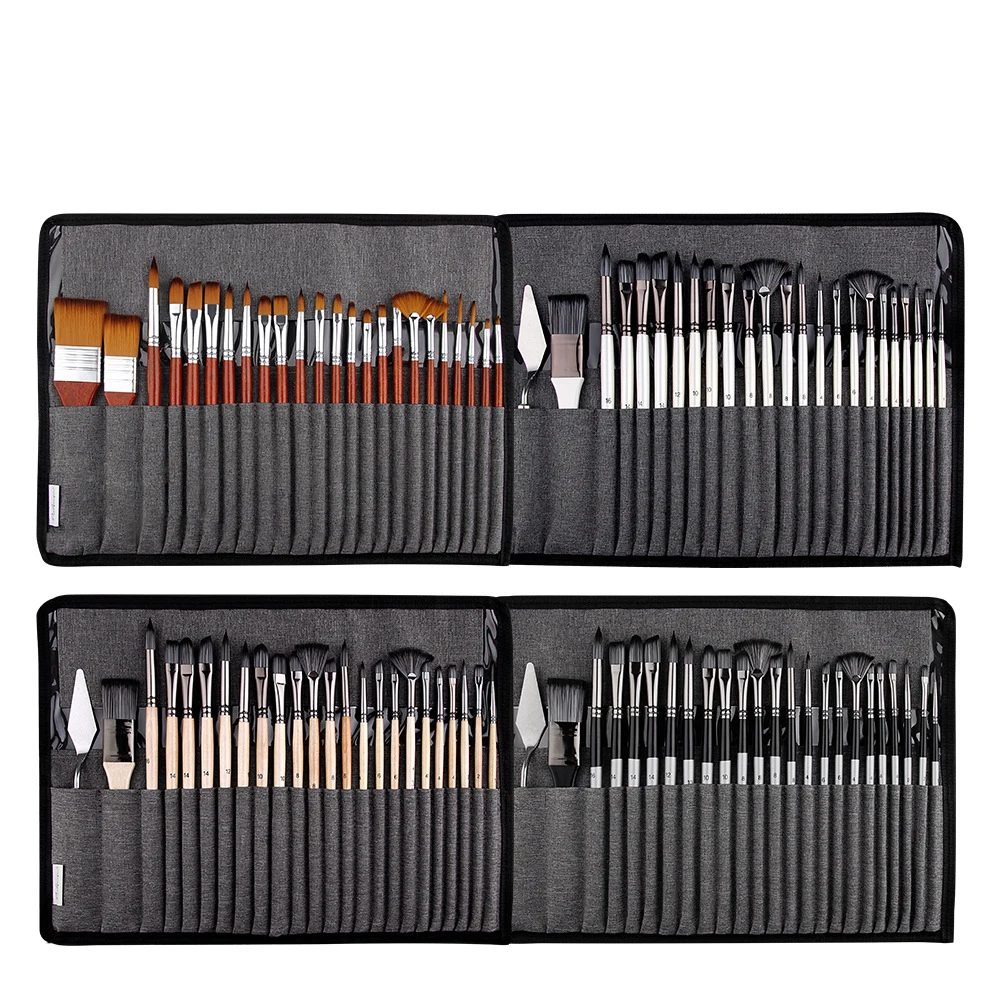
Many people discover paint by numbers through inexpensive kits, and the brushes supplied with them are often one of the weakest parts of the package.
The familiar small plastic-handled brushes can work, but quality varies considerably.
Typical complaints include bristles spreading apart, hairs falling out, brushes losing their points and handles becoming uncomfortable during long painting sessions.
A detailed 40 × 50 cm painting can take many hours to complete. Brush quality therefore matters far more than it might initially seem.
The solution
Use a selection of brush sizes rather than attempting everything with one brush.
A fine pointed brush is useful for small numbered areas, while medium and larger brushes make bigger areas much faster to complete.
Keep brushes clean.
Acrylic paint dries quickly and can gradually build up near the base of the bristles. Rinse brushes regularly during painting and reshape the tip gently afterwards.
Better brushes can also dramatically improve the experience.
This is one reason Hobby Paint Studio kits use premium wooden-handled brushes rather than relying on the small blue plastic brushes commonly supplied with budget paint by numbers sets.
It sounds like a relatively small upgrade.
After several hours of painting, it does not feel small.
5. “Some sections are far too tiny”
You are happily filling larger areas when suddenly you reach a collection of sections that seem almost microscopic.
Trees, faces, architecture, machinery and detailed backgrounds can create hundreds of tiny shapes.
For some painters this detail is enjoyable. For others it becomes frustrating.
The solution
Start with the right tools.
A fine brush with a good point is much easier to control than a damaged or spreading brush.
Good lighting also makes an enormous difference. A daylight lamp can help reveal fine printed lines, particularly when working during the evening.
Many painters also use a magnifying lamp for highly detailed areas.
Do not worry if you occasionally paint slightly outside a line. Paint by numbers is much more forgiving than people sometimes imagine.
Once neighbouring sections have been painted, tiny inaccuracies usually disappear into the finished picture.
You can also improve the final result by gently blending adjoining sections where appropriate rather than trying to preserve every printed boundary perfectly.
Remember that the numbers and lines are guides.
They are not rules that must remain visible in the finished painting.
6. “I can’t read the numbers after I’ve painted over them”
This is a classic paint by numbers problem.
You paint part of an area, leave the project for a few days and then return wondering which colour belongs in the remaining section.
Unfortunately, the identifying number has already disappeared underneath the paint.
The solution
Always keep the reference guide supplied with the kit.
Before starting, you can also photograph the canvas with your phone. That gives you a permanent record of the original numbered layout.
Digital reference images are particularly useful because you can zoom into small areas.
Another technique is to work methodically.
Some painters complete one colour throughout the entire picture before moving to the next. Others work on one geographical section of the painting at a time.
There is no correct method.
The important thing is to have a reference available if you lose track of a section.
Never throw away the printed guide until the painting is completely finished.
7. “The finished painting doesn’t look like the picture”
This can be one of the most disappointing complaints.
The image on the box looks beautiful, but the completed painting seems flatter, harsher or less detailed.
Several factors can cause this.
Marketing photographs may show a professionally completed version. Colours may appear different on screens. Some designs also rely heavily on subtle blending that is not obvious when you first paint the numbered sections.
The solution
First, judge the painting from a normal viewing distance.
Paint by numbers artwork is not designed to be inspected from five centimetres away. Step back several feet and the individual shapes begin visually combining.
Secondly, consider adding some gentle blending.
Where two similar colours meet, use a clean, slightly damp brush to soften the boundary while the paint is still workable.
Once you become confident, you can also add small highlights or shadows.
The numbered design gives you the structure of the painting. It does not prevent you from adding your own finishing touches.
Choosing a kit produced from a carefully prepared design also matters. A well-designed paint by numbers image balances the number of colours, section sizes and level of detail rather than simply converting a photograph automatically.
The design process is part of the quality of the kit.
8. “I ran out of paint”
Few things are more annoying than reaching 90 per cent completion and discovering that one of the major colours has disappeared.
Paint shortages normally happen for one of three reasons: too little paint was supplied, too much was used on early sections, or a pot gradually dried while the project was being completed.
The solution
Use thin coats.
Acrylic paint generally works better in several controlled layers than in one extremely thick application.
Keep the lid closed whenever you are not actually using a colour.
For colours covering especially large areas, check the amount of paint before starting. If a colour appears limited, avoid unnecessary waste.
You can also scrape paint from the inside of the lid and edges of the container using your brush.
If necessary, standard artists’ acrylic paints can be mixed to create a close replacement colour.
The precise shade does not always need to be identical. Slight colour variations can actually make a painting appear more natural, particularly in landscapes, skies, foliage and water.
9. “The canvas is difficult to paint on”
Not all canvases are equal.
Some inexpensive paint by numbers canvases feel rough and absorbent. Your brush seems to drag across the surface rather than glide over it.
Paint disappears into the material, requiring repeated coats.
This can make detailed areas particularly difficult.
The solution
Canvas preparation matters.
Some experienced painters apply clear gesso before starting a budget kit. This creates a better surface and reduces the amount of paint absorbed by the fibres.
However, beginners understandably do not expect to buy a paint by numbers kit and then prepare the canvas themselves before they can use it.
That is why canvas quality was an important consideration in the development of the Hobby Paint Studio range.
Our kits use linen canvas with a pre-treated surface intended to provide smoother paint application and improved adhesion without requiring the customer to apply gesso first.
It is part of a wider philosophy.
A premium kit should remove obstacles from the hobby rather than add them.
You should be able to open the kit and paint.
10. “Paint by numbers feels repetitive”
This complaint is different from the others because there may be nothing technically wrong with the kit.
Sometimes people simply reach the middle of a large painting and lose motivation.
The first few sections are exciting.
Then comes the middle.
Hundreds of sections remain and the completed image still seems a long way away.
The solution
Change how you approach the project.
Do not think of it as something that must be completed quickly.
Paint for twenty or thirty minutes at a time. Put on some music, a podcast or an audiobook and make painting part of your relaxation routine.
You can also alternate between different parts of the picture.
If you have spent an hour working on tiny detailed sections, move to a larger area where progress is faster.
Take photographs as you go.
Looking back at the blank canvas and comparing it with your current progress can be surprisingly motivating.
Most importantly, remember why paint by numbers exists.
There is no deadline.
The process is part of the pleasure.
Choosing a Better Paint by Numbers Kit
Many paint by numbers frustrations are not really problems with the hobby itself.
They are problems with poorly produced kits.
There is an enormous difference between something designed primarily to be as cheap as possible and a kit designed around the experience of the person actually painting it.
Before buying, consider the canvas quality, how it is packaged, the brushes supplied, the quality of the printed design and the overall presentation.
At Hobby Paint Studio, those details are central to the range.
Our aim is to offer premium paint by numbers kits for adults, including designs inspired by British history, locations, landmarks and events. The range combines carefully prepared designs with pre-treated linen canvas and improved wooden-handled brushes to create a more enjoyable painting experience.
The supplier formats behind the Hobby Paint Studio range include 40 × 50 cm canvases in both unframed and framed configurations, with colour-box packaging available for the framed version.
The difference between an ordinary kit and a premium kit is often found in seemingly small details.
Better canvas.
Better brushes.
Better packaging.
Better preparation.
Together, they can transform the experience.
Don’t Let Small Problems Spoil a Great Hobby
Paint by numbers remains popular for a very good reason.
You do not need years of artistic training. You do not need to understand perspective, colour theory or drawing. The structure is already there, allowing you to concentrate on the simple satisfaction of gradually bringing the image to life.
There will occasionally be challenges.
A pale colour might need another coat. A tiny section might require a steadier brush. One part of the painting might take longer than expected.
That is normal.
What should not be normal is battling poor brushes, badly creased canvases or unnecessarily difficult materials.
Choose a quality kit, take your time and remember that there is no requirement for your finished painting to be absolutely perfect.
It is yours.
Every brushstroke contributes to something you have created yourself.
And when the final numbered section disappears beneath the paint and you step back to see the completed picture, that feeling of achievement is exactly what makes paint by numbers such an enjoyable hobby.